
It’s the first full workweek of 2026 — do you know where your New Year’s resolutions are?
If one of those resolutions was to improve your overall health and well-being, you’ll want to know what the experts believe will be the most prominent fitness trends this year.
Thanks to the good folks at American College of Sports Medicine, who surveyed some 2,000 clinicians, researchers and exercise professionals and just released their annual Worldwide Fitness Trends forecast, we all know where the fitness world is headed — and how it may impact your workouts in the future.
Without further ado, here are some of the top fitness trends predicted by the experts:
Wearable technology
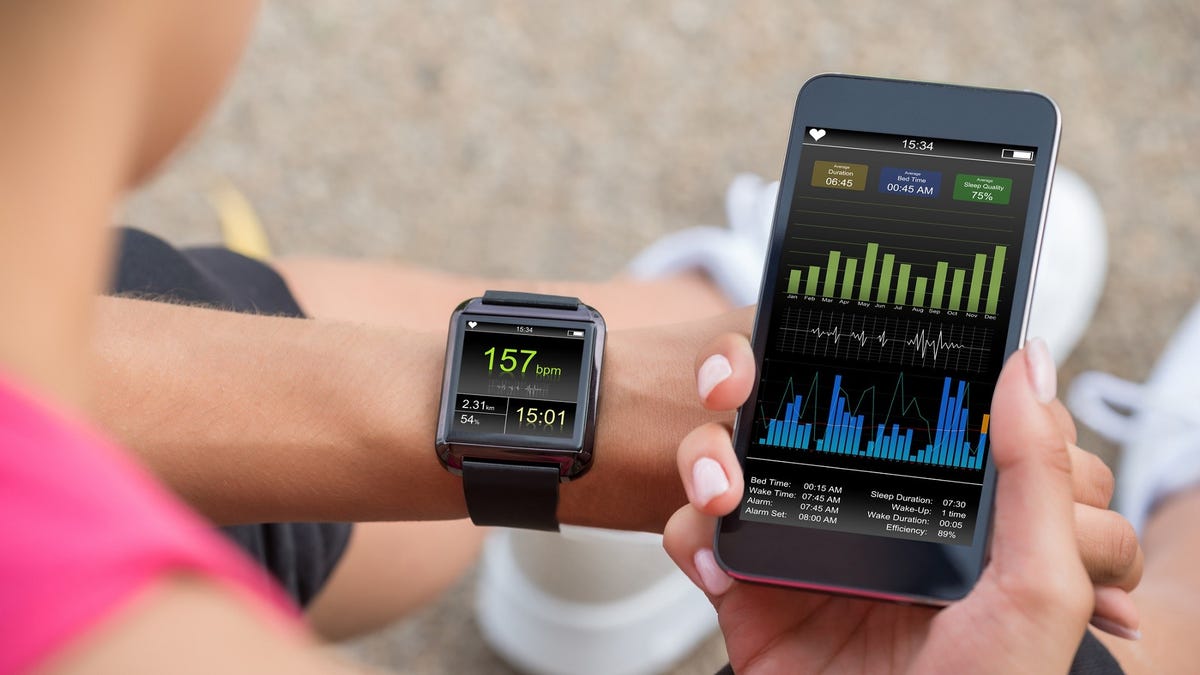
The report notes that nearly half of all adults in the U.S. now own a fitness tracker and/or smartwatch, and their popularity has led the wearable technology industry to evolve. Products now come equipped with advanced biosensors capable of capturing indicators such as fall or crash detection, heart rhythm, blood pressure, blood glucose and skin temperature.
These high-tech capabilities are particularly useful for a large swath of people, including patients in rehabilitation, exercise beginners, seasoned recreational athletes, and active senior citizens.
Data-driven exercise programs
Another high-tech fitness trend is the use of data to adjust how people approach their exercise programs. More than 70% of wearable technology users have reported applying their output data to inform exercise or recovery strategies, and exercise professionals can use biofeedback to tailor intensity, assess readiness and reduce risk of overtraining.
Regardless of one’s fitness level, all exercise aficionados can benefit from personalized adjustments that align training with recovery status.
Fitness programs for older adults
Baby boomers — by virtue of their large numbers — have always led the way in national trends. They account for some 73 million Americans, all of whom will be over age 65 by 2030.
According to a recent Health & Fitness Association report, those 65 and older now visit gyms and fitness studios more often than any other age group and as baby boomers age into the winter of their lives, the demand for age-appropriate, evidence-based exercise programs will only continue to intensify.
Exercise for weight management
With so many people taking GLP-1 medications for weight loss/management, exercise programs that help support the building of lean muscle mass, cardiovascular health, balance, and flexibility are crucial for maximizing health.
Recent research bears this out.
The American College of Sports Medicine says that people who continue to exercise while using these medications maintain greater fat loss and preserve lean mass even after stopping medication than those who just use medication alone.
Mobile exercise apps
These apps deliver on-demand, scheduled, live-streamed, and/or recorded workouts, offering users convenience and flexibility to exercise anytime, anywhere.
In 2024, more than 345 million people worldwide used fitness apps. Those who use fitness apps tend to skew younger — often Gen Zers and millennials who have grown up with smartphones on their persons at all times. Among the most prevalent users are college-educated professional women who live in big cities.
Exercise for mental health
We all know that the brain and body are connected — and that if an activity benefits one, it also benefits the other. The American College of Sports Medicine noted that “one national survey found that 78% of exercisers cite mental or emotional well-being as their top reason for working out, ahead of physical fitness or appearance goals.”
Adult recreation and sport clubs
Hey, we all need a little more play in our lives — and that’s especially true in today’s economically challenging times. This trend reflects the growing interest in people of all ages to partake in activities that combine fitness with fun, flexibility and social connection outside of traditional gym settings — and, no surprise, the rise in the popularity of pickleball is leading the way. Running clubs and adult leagues in basketball, soccer, softball, and kickball have also seen a rise in popularity in recent years.
Functional fitness training
Studies show that, absent strength-training exercise, we will lose muscle mass every decade. Some estimates put the figure of that muscle-mass loss at 30% between the ages of 30 and 70 — and then in one’s 70s, 80s and 90s, the rate of muscle-mass loss speeds up even more. As one loses muscle mass, a host of other complications can arise — including a loss of balance as well as the ability to perform simple everyday tasks, such as carrying groceries, getting into and out of automobiles and negotiating stairs, among others.
Functional training helps mitigate these risks — and can often be done with safe and simple bodyweight movements, such as squats, lunges, planks, pushups and the like.
Steve Dorfman is a journalist for The Palm Beach Post, part of the USA Today Network of Florida. He writes about all aspects of health, fitness and wellness. If you have news tips, please send them to [email protected]. Help support our local journalism, subscribe today.
link