
This concept is framed around the Mediterranean Diet principle, focusing more on adding things in than restrictions.
The tenets of the Mediterranean Diet are the foundation of Culinary Medicine:
- Vegetables. It is suggested to fill half your plate with a variety of veggies.
- Legumes. Beans and lentils add protein and fiber and can be sprinkled into most dishes for a flavor, texture and nutrient boost
- Fruits, nuts and seeds
- Whole grains
- Seafood
- Oils. Choosing unsaturated (olive oil primarily, with recommendations to limit saturated fats)
- Dairy with an emphasis on cultured dairy, like yogurt and feta cheese and hard-aged cheese like Parmesan
- Meats with a recommendation of about 4 ounces of lean meat per day and limiting red meat to one serving per week
April’s Kitchen: When health care meets food, it makes for happy cooking. Here’s how.
The recipes we prepared in our Culinary Medicine class with our physicians and pediatric residents make this outline approachable.
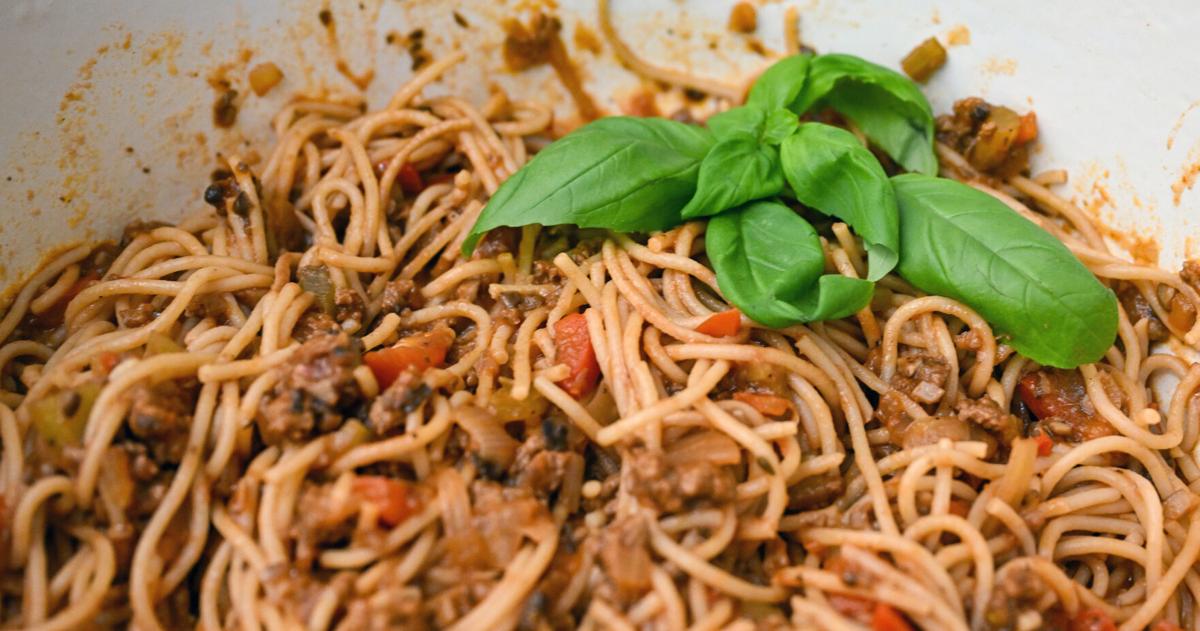
We prepared ‘Spaghetti Four Ways’ beginning with a classic meat sauce and gradually enhancing the following three batches with added vegetables and then added lentils, then all vegetables with lentils and no meat. The unofficial crowd favorite was the one with the works — tons of veggies, half the meat, plus lentils and served on whole wheat spaghetti. The Caesar salad was a hit as well.
We also debunked the myth that eating healthy costs more. This feast for 20-plus cost $85.70 in ingredients with extra pantry items for our next session. Delicious, nutritious pasta and salad for $4 per serving? That makes everyone happy.

Ground beef is pressed into a pan with diced vegetables during a culinary medicine workshop at LSU’s Human Ecology building on Jan. 7.
Spaghetti with Meat and Lentils
The recipe is from the Health Meets Food curriculum (www.culinarymedicine.org).
1 1/2 quarts water
1/2 cup brown or green lentils
1 tablespoon olive oil
1 medium white or yellow onion, diced
1 large stalk celery, diced
1/2 large red bell pepper, diced
8 ounces mushrooms, minced
2 cloves garlic, minced
8 ounces lean ground beef (90/10)
1 (15-ounce) can no-salt-added tomato sauce
1 teaspoon Worcestershire sauce
1/4 cup water
2 1/2 teaspoons Italian seasoning
1/2 teaspoon salt
Black pepper to taste
4 quarts water
12 ounces dried whole wheat spaghetti
1. Bring 1 1/2 quarts water to a boil in a medium-sized saucepan. Add the lentils and cook until tender, about 20 minutes. Drain, rinse and set aside.
2. While the lentils are cooking, make the sauce. Heat the olive oil in a large skillet over medium-high heat. When the oil shimmers, add the onion and cook for 3 minutes, stirring frequently. Add the celery and bell pepper and cook for 2 minutes, stirring frequently. Add the mushrooms and cook for 5 to 7 minutes, or until the liquid has evaporated. Add the garlic and cook 1 minute.
3. Add the beef to the vegetable mixture and stir to brown and break up the meat, cooking until no longer pink. Add the tomato sauce, Worcestershire, 1/4 cup water, Italian seasoning, salt, pepper to taste and the cooked lentils. Stir, reduce heat to medium-low, cover and cook for about 30 minutes. Add water in 1/4-cup increments if sauce is too thick.
4. While the sauce cooks, bring the 4 quarts of water to boil in a stockpot over high heat. Cook the pasta according to package directions until al dente.
5. Divide the cooked pasta into 6 servings and top each with about ¾ cup sauce.

Olivia Dinh chops lettuce for a Caesar salad during a culinary medicine workshop at LSU.
Caesar Salad
Recipe is adapted from the Health Meets Food curriculum (www.culinarymedicine.org). The dressing keeps well in the fridge for up to a week.
2 cloves garlic, peeled and roughly chopped
1 tablespoon Worcestershire sauce
1/4 teaspoon black pepper
Juice of half a lemon, or more to taste
2 tablespoons Dijon mustard
1 teaspoon honey
1 1/2 ounces Parmesan cheese, grated
1/2 cup nonfat Greek yogurt
Romaine lettuce, about 3 large leaves per serving
1. Place the garlic, Worcestershire, pepper, lemon juice, mustard, honey, Parmesan and yogurt in a blender and process until smooth. Alternatively, ingredients can be placed in a 4-cup measuring cup or wide-mouth mason jar and blended with an immersion blender.
2. Transfer dressing to an airtight container and refrigerate for at least 2 hours or up to one week.
3. Rinse the lettuce and spin dry, or dry with clean kitchen towels. Slice the lettuce crosswise or tear by hand into bite-size pieces. Refrigerate until serving time.
4. Toss the lettuce in a large salad bowl with half of the dressing and toss to coat. Serve with remaining dressing on the side as desired.
link