
Market Size & Trends
The U.S. connected fitness equipment market size was estimated at USD 1.17 billion in 2024 and is expected to grow at a CAGR of 19.3% from 2025 to 2033. Modern fitness enthusiasts, especially Millennials and Gen Z, are increasingly gravitating toward connected fitness equipment that blends physical exercise with engaging digital experiences. Rather than sticking to static workouts, these consumers favor interactive systems featuring live and on-demand classes, personalized performance metrics, and community-driven features like virtual leaderboards and group challenges. This evolving preference is fueling interest not only in connected bikes and treadmills but also in smart strength trainers, rowing machines, and AI-powered fitness mirrors. Additionally, a growing emphasis on holistic wellness is driving demand for equipment that incorporates recovery tools, mental health content, and wellness tracking alongside traditional exercise features.
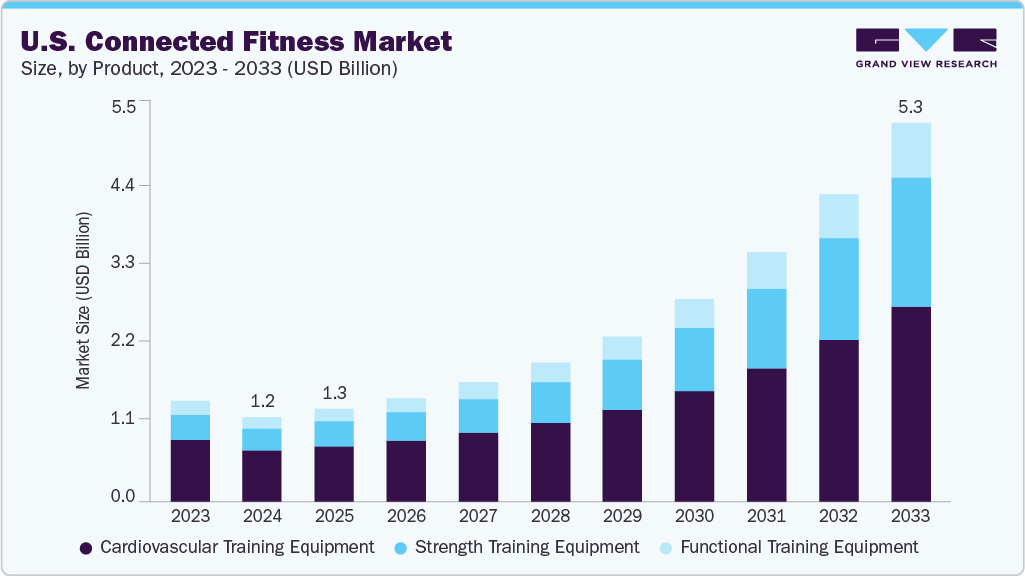
By 2024, U.S. fitness brands and digital wellness platforms reported a notable surge in consumer investment in connected equipment and subscriptions. Several industry players have highlighted that U.S. spending on digitally enabled fitness gear climbed roughly 27% above pre-2020 levels by the middle of 2024, surpassing growth seen in conventional gym memberships and standalone equipment sales. At the same time, insights shared by fitness retailers and app providers indicate that American users average nearly five connected workout sessions per week, up from about three weekly sessions in 2019. These shifts demonstrate that consumers increasingly build their fitness routines around technology-driven engagement rather than relying solely on in-person experiences.
Moreover, industry trends reveal an expanding market for specialized connected fitness products targeting diverse user groups and fitness goals. Brands are designing hardware and software tailored for competitive athletes, beginners, older adults, and families, integrating features like adaptive resistance, form correction, and personalized training plans powered by artificial intelligence. For example, smart strength systems now offer dynamic load adjustments and real-time coaching, turning home spaces into sophisticated personal gyms.
In major urban hubs, connected fitness is evolving into hybrid ecosystems. Cities like New York, Los Angeles, and Chicago are witnessing boutique fitness studios blending live in-person sessions with streamed classes accessible via home fitness devices. Companies increasingly bundle hardware purchases with subscription services, offering perks such as customized workout plans, live competitions, and even wellness coaching. This trend dovetails with broader consumer interest in health and well-being during the 2024 holiday season, when millions of Americans allocated discretionary spending toward fitness and wellness activities.
In addition, government initiatives at the federal and state levels are indirectly boosting connected fitness adoption through expanded broadband access and technology grants that support digital infrastructure critical for streaming and interactivity. Programs designed to improve connectivity in underserved regions are helping broaden the market for smart fitness devices beyond urban centers.
Recent product launches reflect the industry’s innovative momentum. Peloton unveiled its upgraded Bike+ in early 2024, introducing enhanced auto-resistance features and deeper integration with third-party apps. Tonal released an updated strength training unit with quieter operation and AI-driven weight adjustments. Hydrow launched the compact Hydrow Wave Rower, appealing to consumers in smaller living spaces, while NordicTrack expanded its iFIT treadmill range, featuring immersive virtual routes and advanced incline technology.
Furthermore, digital technologies are transforming connected fitness into a more immersive experience. Companies are exploring augmented reality workouts, biometric feedback, and AI coaching to deliver personalized, engaging, and data-rich exercise sessions. These advancements are redefining how Americans connect with fitness and wellness in their daily lives.
Consumer Insights
Consumer behavior in the connected fitness market reflects a shift toward more active lifestyles across all age groups. Young adults are leading this movement, showing high enthusiasm for incorporating regular physical activity into their daily routines. Middle-aged individuals also embrace fitness, driven by a growing health and wellness awareness. Even among older adults, there is a noticeable increase in daily physical activity, signaling a broader acceptance of active living. This trend underscores the growing relevance of connected fitness solutions across generations, highlighting their ability to cater to diverse needs and preferences.
The connected fitness equipment and services market demonstrates diverse age-based adoption patterns, reflecting varying health goals, digital affinity, and purchasing power across demographic cohorts. Millennials (aged 25-40 years) and Generation X (aged 41-56 years) constitute the largest consumer segments within this market. Millennials exhibit high adoption driven by their familiarity with digital technologies, prioritization of fitness and wellness as integral lifestyle components, and strong preference for personalized, data-driven workout experiences.
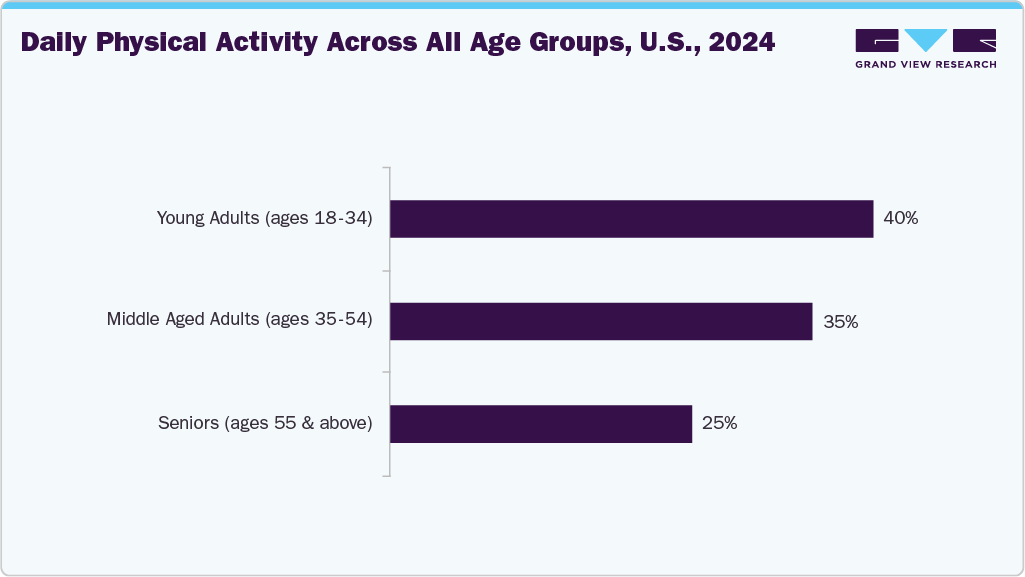
Generation X, meanwhile, represents a significant revenue-contributing segment, characterized by higher disposable incomes and a pronounced focus on preventive health management and convenience-driven fitness solutions. Their purchasing decisions are influenced by value propositions around holistic health monitoring, injury prevention, and flexible hybrid fitness options that integrate home workouts with gym-based programs.
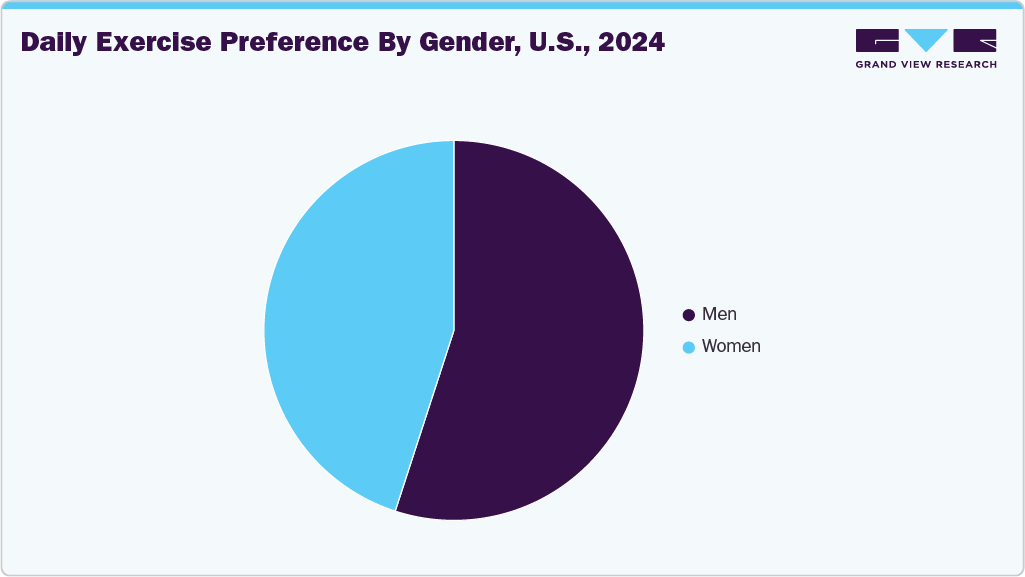
Gender-based consumer behavior in the connected fitness market highlights growing engagement from both men and women, though with differing preferences and motivations. Men often move toward performance-oriented features, focusing on strength, endurance, and measurable progress. In contrast, women favor holistic wellness approaches, incorporating activities like yoga, pilates, and guided sessions that emphasize overall well-being. This broad participation across genders reflects the versatility of connected fitness solutions in meeting diverse fitness goals and supporting personalized health journeys.
Men and women increasingly engage in daily physical activity, though their participation levels vary slightly. About 32% of men exercise daily, compared to 28% of women. However, more women actively embrace fitness routines and wellness practices, steadily narrowing the gap.
Product Insights
Cardiovascular training equipment accounted for a revenue share of 60.19% in the year 2024 in the U.S. connected fitness equipment industry. Devices like treadmills, exercise bikes, ellipticals, and rowing machines are equipped with Bluetooth connectivity, real-time performance tracking, interactive touchscreens, and access to live or on-demand virtual classes. This integration enhances user motivation, allows personalized training, and brings a studio-like experience into the home or gym. A survey by the Sports & Fitness Industry Association (SFIA) revealed that running and jogging remain among the most popular cardiovascular fitness activities in the U.S., with around 60 million Americans engaging in running-related exercises each year.
Strength training equipment is projected to grow at a CAGR of 22.6% over the forecast period. Many fitness enthusiasts are shifting from purely cardio-focused routines to balanced programs that include resistance training, driven by widespread awareness of its role in boosting metabolism and supporting healthy aging. Connected technology is making strength training more accessible and appealing, offering guided workouts, real-time feedback, and progress tracking that help users maintain motivation and proper technique. Additionally, as home gyms become more common, consumers are seeking compact, multi-functional strength equipment that fits smaller spaces while delivering varied workouts. This combination of health trends and tech innovation is fueling stronger interest in connected strength training solutions.
Application Insights
Business-to-Consumer (B2C) led the U.S. connected fitness equipment market with a revenue share of 84.44% in 2024. Factors like busy lifestyles, the desire for privacy, and lingering habits formed during the pandemic have driven consumers to invest in personal fitness spaces rather than rely solely on gyms. Connected equipment offers interactive features, on-demand classes, and progress tracking that replicate the gym experience while providing the convenience of exercising anytime. Brands have also heavily marketed directly to consumers through digital channels, offering flexible financing and subscription models that make high-tech equipment more attainable. This direct engagement and personalized appeal have fueled strong B2C sales, cementing its majority share in the market.
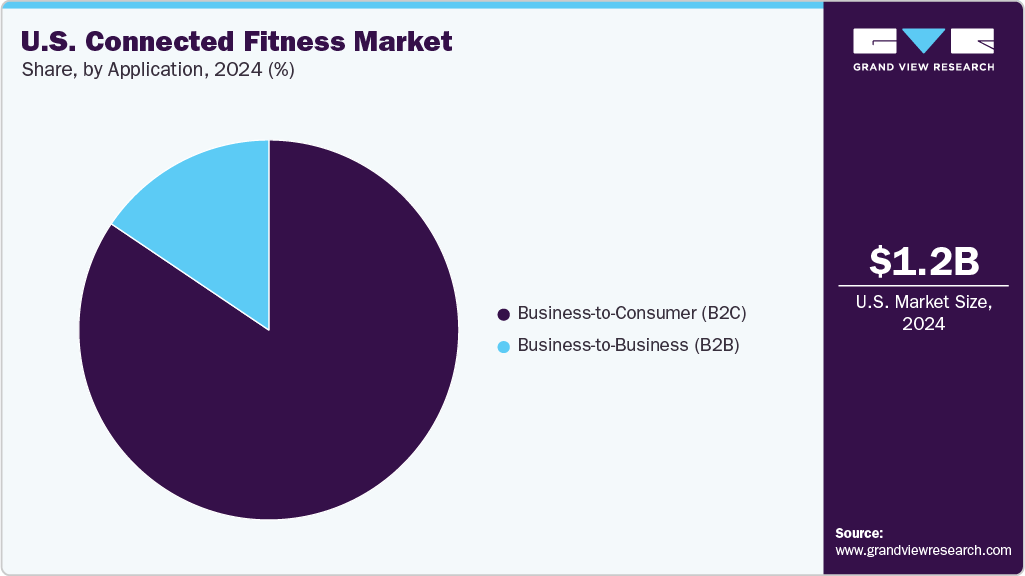
The demand for connected fitness equipment in the business-to-business (B2B) industry is expected to grow at a CAGR of 25.4% from 2025 to 2033. Gyms, hotels, corporate wellness programs, and residential complexes are increasingly investing in connected machines that provide immersive workouts, virtual coaching, and performance tracking to enhance user engagement and satisfaction. For businesses, these features not only differentiate their services but also offer data insights that help tailor fitness offerings and optimize equipment use. The growing focus on employee health and well-being, coupled with consumers’ rising expectations for tech-integrated experiences outside the home, is prompting more B2B buyers to upgrade their facilities with smart equipment. This shift toward digital transformation in commercial fitness spaces is expected to sustain healthy growth in the B2B segment over the coming years.
Key U.S. Connected Fitness Equipment Company Insights
The U.S. connected fitness equipment market is shaped by a blend of established industry leaders and agile new entrants, creating a competitive and fast-moving environment. Key players focus on delivering highly personalized, tech-enabled workout experiences that integrate seamlessly into users’ lifestyles. Strategic partnerships with software developers, wellness platforms, and health professionals help expand the value of smart equipment and enhance user engagement.
The market is increasingly defined by innovation, ranging from AI-powered coaching and adaptive resistance to interactive touchscreens and real-time performance analytics. Digital ecosystems that combine equipment with subscription content, community features, and mobile accessibility are now standard, appealing to consumers who seek convenience and variety. Sustainability and accessibility are also gaining importance, with companies exploring eco-conscious manufacturing, inclusive design, and scalable models that cater to different income levels. This convergence of advanced technology, consumer personalization, and social responsibility allows the connected fitness industry to meet diverse wellness goals while adapting to broader shifts in health-conscious and digitally driven lifestyles.
Key U.S. Connected Fitness Equipment Companies:
- Peloton Interactive, Inc.
- Technogym S.p.A.
- Johnson Health Tech Co., Ltd.
- iFIT Health & Fitness, Inc.
- Life Fitness
- Precor Incorporated
- EGYM GmbH
- Echelon Fitness Multimedia LLC
- Tonal Systems, Inc.
- Ergatta, Inc.
Recent Developments
-
In September 2024, iFIT, the parent company of NordicTrack and ProForm, introduced a large range of new smart fitness machines, updating over 40 products with improved screens and processing power. Among the highlights are advanced treadmills capable of steep inclines, bikes that simulate both climbing and descent, and refreshed commercial-grade equipment. These devices run on an updated iFIT operating system and include an AI Coach feature, which offers tailored workout suggestions and schedules that sync directly to users’ machines. New technology like SmartAdjust and ActivePulse helps automatically adapt workouts based on personal metrics. At the same time, added entertainment options and integration with apps like Strava and Apple Health aim to create a more engaging and personalized fitness experience at home.
-
In September 2022, Peloton joined forces with Dick’s Sporting Goods to make its fitness products available in more than 100 Dick’s stores across the U.S. and through the retailer’s website. This partnership marks the first time Peloton equipment, including the Bike, Bike+, Tread, and Guide+, along with various accessories, will be sold outside Peloton’s own sales channels. Customers will have the opportunity to try out the equipment in stores, receive help from trained staff, and choose between home delivery with professional setup or taking certain items home immediately. The collaboration is aimed at expanding Peloton’s reach and attracting new customers, particularly during peak shopping periods.
U.S. Connected Fitness Equipment Market Report Scope
|
Report Attribute
|
Details
|
|
Market size value in 2025
|
USD 1.28 billion
|
|
Revenue forecast in 2033
|
USD 5.26 billion
|
|
Growth rate
|
CAGR of 19.3% from 2025 to 2033
|
|
Actuals
|
2021 – 2024
|
|
Forecast period
|
2025 – 2033
|
|
Quantitative units
|
Revenue in USD billion and CAGR from 2025 to 2033
|
|
Report coverage
|
Revenue forecast, company ranking, competitive landscape, growth factors, and trends
|
|
Segments covered
|
Product, application
|
|
Country scope
|
U.S.
|
|
Key companies profiled
|
Peloton Interactive, Inc.; Technogym S.p.A.; Johnson Health Tech Co., Ltd.; iFIT Health & Fitness, Inc.; Life Fitness; Precor Incorporated; EGYM GmbH; Echelon Fitness Multimedia LLC; Tonal Systems, Inc.; Ergatta, Inc.
|
|
Customization scope
|
Free report customization (equivalent up to 8 analysts working days) with purchase. Addition or alteration to country, regional & segment scope.
|
|
Pricing and purchase options
|
Avail customized purchase options to meet your exact research needs. Explore purchase options
|
U.S. Connected Fitness Equipment Market Report Segmentation
This report forecasts revenue growth at the country level and provides an analysis of the latest trends and opportunities in each of the sub-segments from 2021 to 2033. For this study, Grand View Research has segmented the U.S. connected fitness equipment market report based on product and application:
-
Product Outlook (Revenue, USD Billion, 2021 – 2033)
-
Cardiovascular Training Equipment
-
Smart Treadmills
-
Smart Bikes
-
Connected Rowers
-
Others
-
-
Strength Training Equipment
-
Functional Training Equipment
-
-
Application Outlook (Revenue, USD Billion, 2021 – 2033)
Frequently Asked Questions About This Report
b. The U.S. connected fitness equipment market was estimated at USD 1.17 billion in 2024 and is expected to reach USD 1.28 billion in 2025.
b. The U.S. connected fitness equipment market is expected to grow at a compound annual growth rate of 19.3% from 2025 to 2033 to reach USD 5.26 billion by 2033.
b. Cardiovascular training equipment accounted for 60.19% of revenue in the U.S. connected fitness equipment industry in 2024, reflecting its role as the most widely adopted category for home and gym-based digital workouts. The dominance of connected treadmills, stationary bikes, and rowers is driven by their effectiveness in endurance training and their seamless integration with interactive platforms.
b. Some of the key players in the U.S. connected fitness equipment market include Peloton Interactive, Inc., Technogym S.p.A., Johnson Health Tech Co., Ltd., iFIT Health & Fitness, Inc., Life Fitness, Precor Incorporated, EGYM GmbH, Echelon Fitness Multimedia LLC, Tonal Systems, Inc., Ergatta, Inc.
b. The U.S. connected fitness equipment market is driven by rising consumer preference for at-home smart workout solutions and increasing integration of AI-driven training features. Strong demand for immersive experiences, subscription-based ecosystems, and health-focused lifestyles further fuels market expansion.
link